



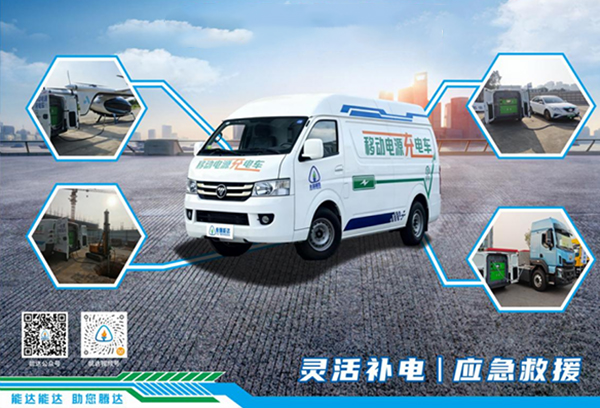
With the widespread application of mobile storage and charging vehicles in emergency power protection, temporary energy replenishment, engineering operations and other scenarios, the safe operation and maintenance of equipment has become the key to ensuring use efficiency and preventing risks. As a special equipment integrating high-voltage energy storage, mobile carriers, and electrical control, its safe operation is inseparable from standardized daily maintenance and standardized operation. The following is a practical point of science popularization of the safety operation and maintenance of mobile storage and charging vehicles.
1. Daily "physical examination" is indispensable, and details are controlled to prevent hidden dangers
The daily operation and maintenance of mobile storage and charging vehicles should start with basic inspections to build the first line of defense for safety. Before leaving the car and after receiving the car, it is necessary to focus on checking the status of the vehicle's chassis, including whether the tire pressure, brake system, lights and various fluids are normal, to ensure the safety and reliability of the mobile carrier; At the same time, observe the appearance of the energy storage cabin, check whether the seal of the cabin is intact, whether there is bumps, water ingress or dust accumulation, and avoid the impact of the external environment on the core components.
The electrical interface is a key node for operation and maintenance, and it is necessary to regularly check the charging gun, discharge cable and terminal block to confirm that there are no signs of damage or overheating, and the interface contacts are clean and dry to ensure reliable connection. In addition, it is necessary to check the operating status of the BMS battery management system and EMS energy management system through the equipment display every day to ensure that the temperature, voltage, insulation and other parameters are within the normal range, and the functions of various safety alarm devices are effective.
2. Regular maintenance is ruled, and the core system is protected
In addition to routine inspections, regular in-depth maintenance is at the heart of extending the life of the equipment and preventing failures. As the core component, the battery system needs to keep the cabin clean and dry to avoid foreign body intrusion, and regularly check the balance state and insulation performance of the battery cells according to the manufacturer's specifications to prevent safety risks caused by abnormal single cells. The electrical control system needs to regularly tighten the terminal blocks, clean the heat dissipation components, and test safety functions such as leakage protection and high-voltage interlock to ensure stable circuit operation.
Charging and discharging equipment is just as critical as the maintenance of fire protection systems. It is necessary to regularly check the operating status of the charging module, clean the heat dissipation channel, and ensure stable power output. The fire protection device needs to verify the fire extinguisher pressure, the validity period of the fire extinguishing system, and test the linkage response mechanism of smoke and temperature alarms to ensure that protection can be quickly started in case of emergencies. For the detachable skid-mounted mechanism and hoisting fixed parts, regular lubrication maintenance and fastening inspections are required to ensure structural safety during loading, unloading and operation.
3. Standardize the use and keep the bottom line, and improve efficiency through scientific operation and maintenance
Security O&M not only relies on daily maintenance, but also relies on standardized usage habits. Mobile storage and charging vehicles should operate under the specified temperature, humidity and ventilation conditions to avoid long-term overload work, and illegal modification or non-standard wiring is strictly prohibited. If there is abnormal noise, odor, abnormal temperature rise or alarm prompt during operation, it is necessary to stop charging and discharging immediately, cut off the power supply, and have professionals investigate the fault to prevent operation with faults.
It is worth noting that operation and maintenance personnel need to have corresponding professional qualifications and carry out maintenance operations in strict accordance with operating procedures. At the same time, the equipment should avoid long-term parking or operation in extreme weather and harsh environments, and comprehensive inspections should be carried out in time after use in special scenarios to ensure that the equipment status is always in the safe range.
The safe operation of mobile storage and charging vehicles is "three points dependent on equipment and seven points on operation and maintenance". Scientific and standardized daily maintenance and operation can not only give full play to the advantages of mobile energy guarantee of equipment, but also effectively prevent safety risks, so that this new energy equipment can better serve the power demand of various scenarios.
 Home
Home


